The application essays that work do not work because of their topic. They work because of a set of habits: a small concrete subject, an honest voice, and a writer who lets one idea carry the whole piece. Readers in an admissions office see hundreds of essays in a sitting. The ones that stay with them are rarely the ones about the mission trip or the championship game.
This matters for students and for the parents sitting beside them. The word itself is a clue. As Wikipedia's entry on the essay notes, the term comes from the French essayer, "to try" — Michel de Montaigne used it in the sixteenth century to describe his own writing as attempts to put thoughts on the page. An application essay is the same kind of attempt. It is a trial, not a verdict, and the best ones read that way.
What follows is a craft breakdown, not a formula. Nobody outside an admissions office can tell you the exact odds, and any writer who quotes acceptance numbers should be checked carefully. But the patterns below show up again and again in strong personal writing of every kind, and they are all things a seventeen-year-old can actually do. For related coverage, see Flannery O’Connor: A Prayer Journal.
What do admissions readers actually notice first?
They notice whether a real person is talking to them. Before structure, before vocabulary, readers register voice — the sense that one particular human wrote this and no one else could have. Writing guidance from Scribbr makes a related point about openings: the first sentence should pique the reader's interest, whether with an intriguing question, a surprising fact, or a bold statement. In a personal essay that hook is usually a specific detail, not a grand claim.
The cliché essays fail here first. "Ever since I was a child" is a sentence written by a category, not a person. A detail — the exact smell of a grandmother's kitchen, a bus route, a broken clarinet reed — does the work a thesis does in an academic paper. It says: this essay belongs to someone.
Why do small subjects beat big ones?
Because a short essay can only hold one idea well. Applications usually cap length, which means the writer has maybe five hundred words to develop a single line of thought. A big subject — climate change, leadership, overcoming adversity — swallows that space and forces generalities. A small subject forces specifics, and specifics are what make a reader believe you.
There is a long literary pedigree for this. Wikipedia's history of the form describes how Montaigne built his essays out of "commonplacing" — gathering fragments, quotations, and observations, then thinking on the page. The essay has always been a form for working through a small patch of experience, not for summarizing a life. Students who trust that are usually halfway done.
What separates a genuine reflection from a disguised résumé?
Honesty about difficulty. The résumé-in-essay-form has a plot where everything goes right and the writer learns a lesson on schedule. Readers spot it instantly because real thinking is messier. The essays that work admit confusion, a wrong first impression, or a thing the writer still does not understand. Doubt, handled plainly, reads as maturity.
This is also where the essay form earns its keep. Aldous Huxley, quoted in the Wikipedia overview, described the essay as a literary device for saying almost everything about almost anything — and argued that the most satisfying essays draw on three poles at once: the personal and autobiographical, the objective and factual, and the abstract-universal. A strong application essay does exactly that. It starts in one person's particular week, notices something true about the world, and lets the reader feel the general idea without being handed it.
Our analysis: the three-pole test is the fastest self-edit a student can run. If an essay is all personal anecdote with no outward turn, it reads as a diary entry. If it is all abstract lesson, it reads as a lecture. The fix is usually one sentence that looks up from the story and says what it made the writer notice.
What this means for revising
Revision is where the work happens, and the standard writing-process advice holds. Scribbr's guide breaks essay writing into three stages — preparation, writing, and revision — and stresses that the revision stage is about checking content and organization, not just fixing grammar. For a personal essay, that means reading the draft aloud and asking three questions: Is this true? Is it specific? Does every paragraph earn its place?
A few practical steps worth trying:
- Write the essay only you could write. If a classmate could paste their name in, start over.
- Cut the first paragraph. Many drafts find their real opening in paragraph two.
- Replace every abstract noun (passion, leadership, growth) with the scene that produced it.
- Read it aloud. Anywhere you stumble, the reader will too.
- Keep the ending small. A quiet, true last line beats a moral every time.
None of this requires a writing coach. It requires time and a willingness to sound like yourself on paper, which is harder than it sounds at seventeen.
Where can a student see the craft done well?
Read widely, outside the admissions world. The essay is a living form, and the best way to absorb its rhythms is to read people who use them. Aeon's essays page publishes short, serious pieces across science, history, and culture — a good place to watch writers move from a concrete detail to a larger idea. Collections like The Electric Typewriter's gathering of great articles and essays offer the same education for free.
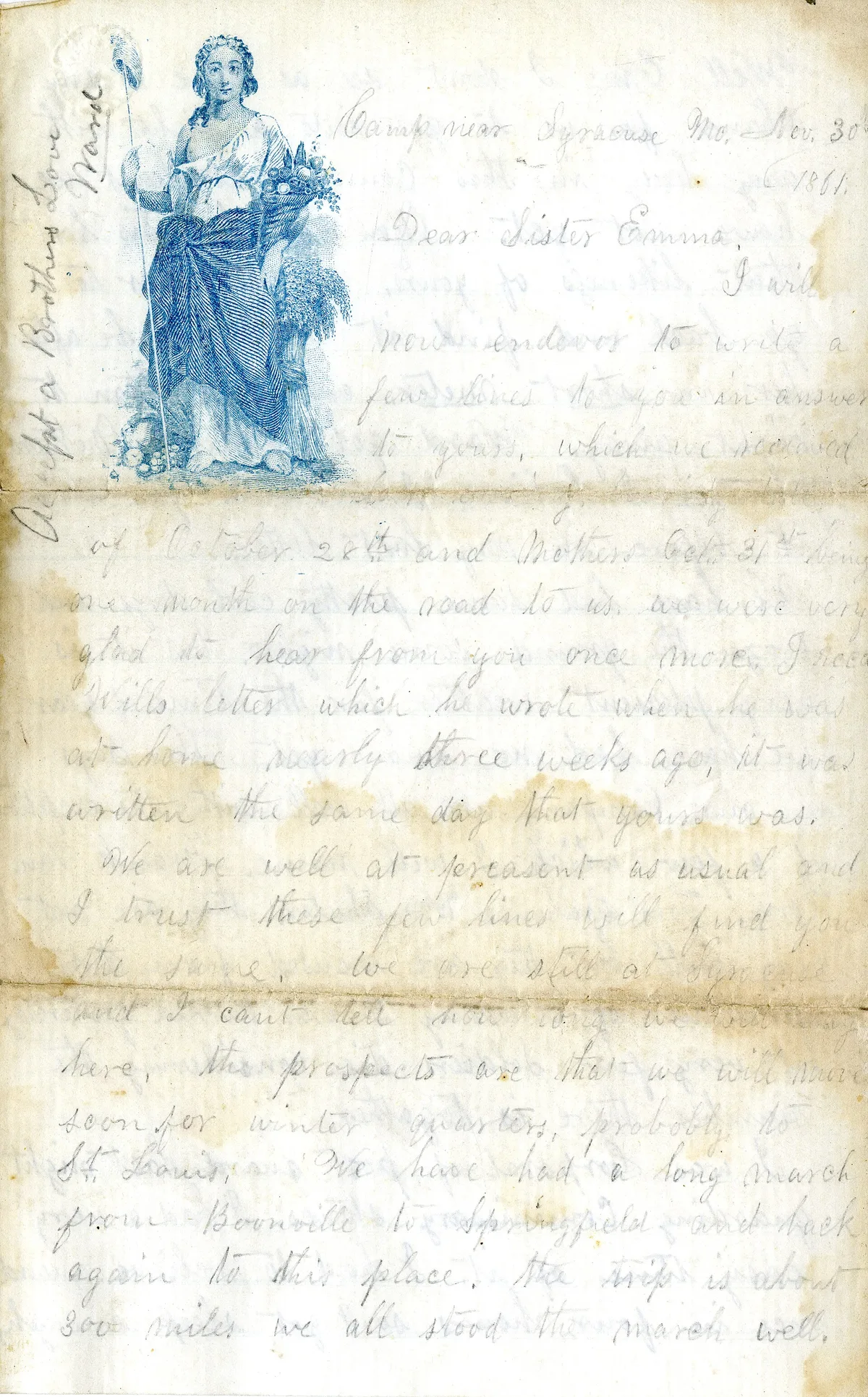
Spiritual and confessional writing teaches the same lessons from another direction. Bonhoeffer's prison letters, Flannery O'Connor's private prayer journal, and C. S. Lewis's raw notebook after his wife's death are all essays in Montaigne's original sense — attempts, made under pressure, to say honestly what a person actually thought. We have written about several of them on this site, including Flannery O'Connor: A Prayer Journal and C. S. Lewis: A Grief Observed, and the common thread is voice: unguarded, specific, unwilling to perform certainty.
That is the standard worth aiming at, whatever the application deadline. Not perfection. An attempt, honestly made — which is what the word essay has meant all along.
The takeaway for families
Parents can help most by asking questions, not by rewriting. What actually happened that day? What surprised you? What do you still not understand? Those questions push a draft toward the specific and the honest, which is what readers in a long admissions day are quietly hoping to find. The essay that works is rarely the polished one. It is the true one, told well enough to be believed.